
Bookbag · AI development, accountable
Run AI development.
Keep control.
Give engineering teams a clear way to govern and scale agent work. Madebook handles coding policies, approvals and evidence. Codebook organizes agents into software factories that plan, build and review.
Madebook + Codebook · One Bookbag account
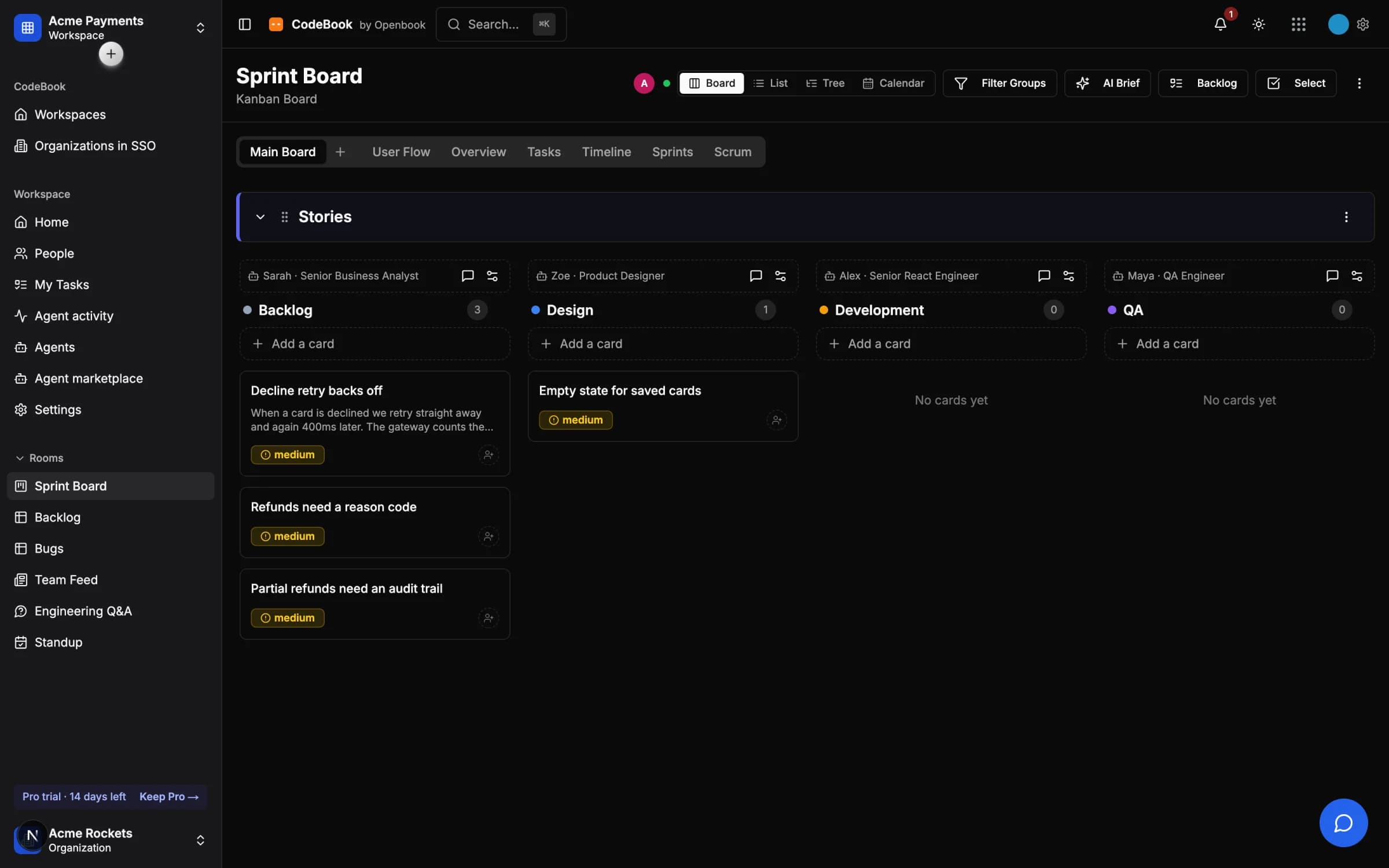
Acme Payments / Delivery
LIVEBacklog
Business Analyst
Decline retry backs off
WritingRefunds need a reason code
Partial refunds, audit trail
Design
Product Designer
Empty state for saved cards
Development
React Engineer
Apple Pay on mobile Safari
QA
QA Engineer
Receipt email wording
Sarah is turning this into acceptance criteria
2
products, one account
Policies
set the rules for agent work
Evidence
understand how changes were made
Workflows
coordinate planning, building and review
The supervision problem
More agents create more work.
Make it manageable.
When agents produce changes faster than people can review them, engineering teams need consistent rules and a clear record of the work.
The pressure
More work to supervise
- More agent changes to review
- Policies scattered across prompts and documents
- Unclear ownership of approvals
- Evidence collected after the work
- Workflows rebuilt for each project
The approach
Bookbag
- ✓Policies your team can define
- ✓Approval rules with clear responsibilities
- ✓Evidence attached to agent work
- ✓Planned stages for building and review
- ✓A shared account across governance and execution
What we do · Two products, one account
Govern the work,
scale the execution
Madebook gives your team policies, approval rules and evidence for AI coding. Codebook coordinates agents through planned development workflows. Together, they keep supervision central as the amount of agent work grows.
Start with the problem your team needs to solve now. Both products use your Bookbag account and organization.
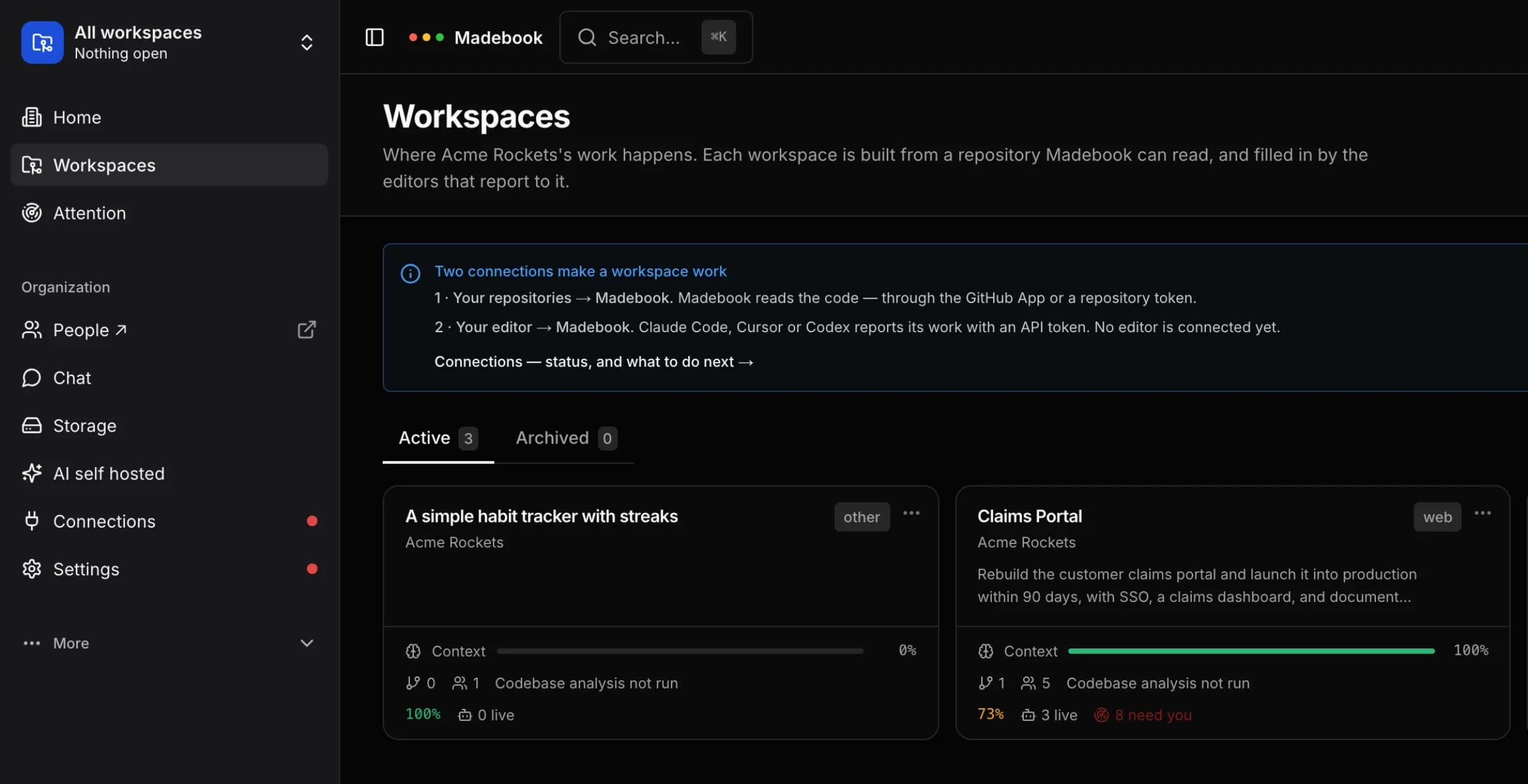
MadeBook
Governance for AI coding agents
Every AI change, checked against your rules
MadeBook supervises the AI coding agents your team already uses — Claude Code, Cursor, Codex — against your organization's policies, approval rules and evidence. It posts a compliance check on each pull request and keeps the audit trail, so when someone asks why a change shipped, the answer is already written down.
- Policies and approval rules that apply to every agent
- A compliance check on each pull request
- An audit trail nobody has to maintain
CodeBook
AI software factories
From a story to a reviewed pull request
CodeBook's agents take a story or an epic through a planned workflow — plan, build, review — and hand back a pull request that has already been reviewed. Supervisors watch each stage, each step goes to the right model for the job, and the agents know your codebase before they touch it.
- Planned workflows: plan, build, review
- Model routing, with a supervisor on every stage
- Grounded in your codebase, not a blank prompt
One ordinary night
You went home.
It kept going.
Nothing here needed a meeting, a stand-up or a nudge. This is one card, moving through one board, between one evening and the next morning.
17:52
You
Left three cards in the backlog and went home
18:04
Analyst
Wrote acceptance criteria for all three
19:20
Designer
Laid out the empty and error states
21:47
Engineer
Built the retry logic and opened a change
23:31
QA
Failed it — declines were retrying twice
01:08
Engineer
Fixed the backoff, pushed again
02:55
QA
Passed. Evidence attached to the card
08:59
You
Opened your laptop to three things waiting for a yes
Nobody stayed up to supervise it
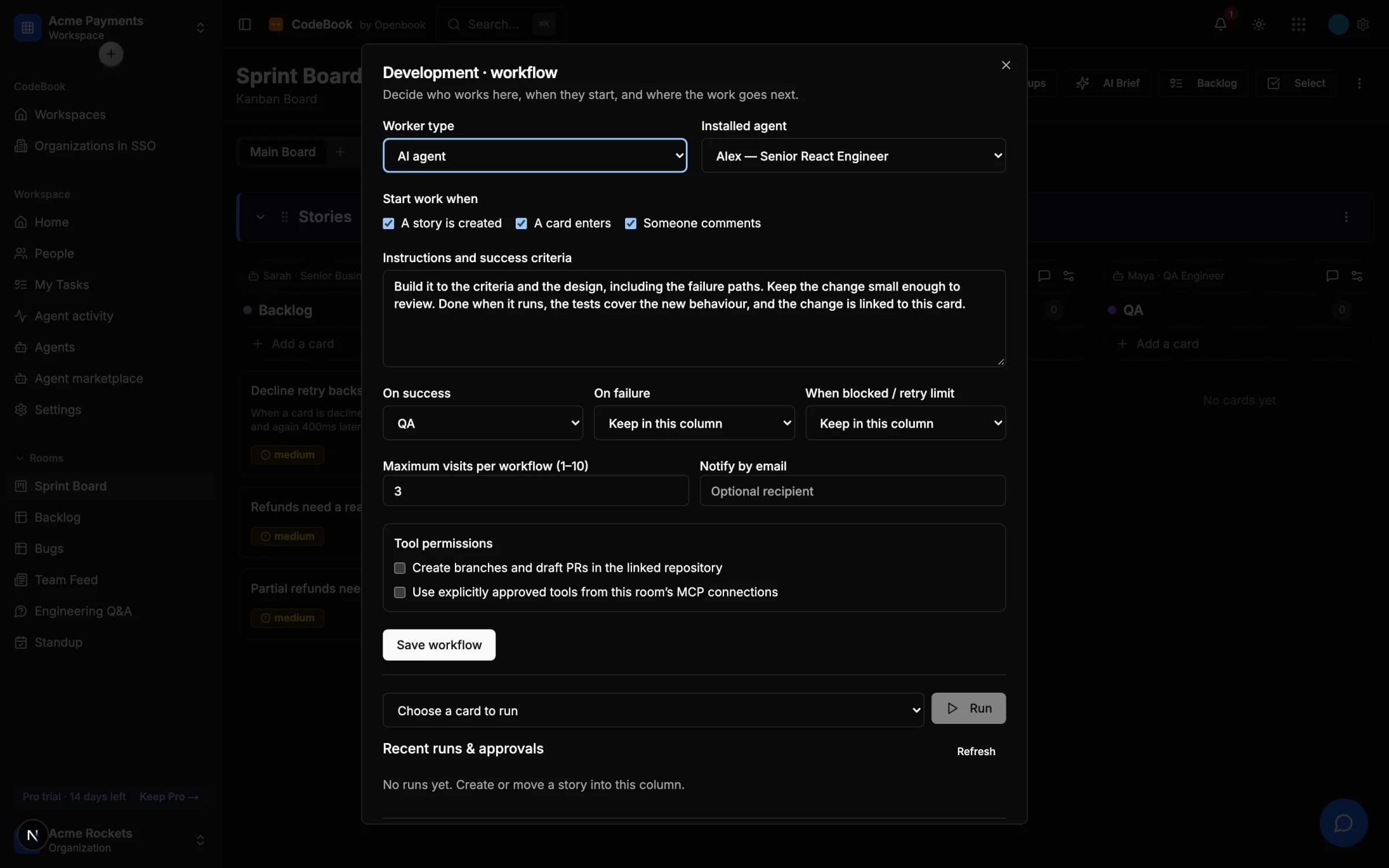
You decide the rules once
Who works in this column, what counts as finished, and where the card goes next — including where it goes when it fails. That last one is why the night above needed nobody: QA sends failed work straight back to engineering, and only a third failure asks for a human.
The workforce
Hire a whole department
before Friday
Analysts, designers, engineers, testers, writers. Put one to work in minutes, tell it how you like things done, and it works that way from then on. There are plenty in the catalogue already, more arriving, and you can build your own.
Business Analyst
Turns an idea into requirements
Product Designer
Screens, states and copy
React Engineer
Builds the front end
.NET Engineer
Builds the back end
QA Engineer
Tries to break it first
Accessibility Tester
Checks everyone can use it
Shopify Specialist
Storefronts and checkout
Technical Writer
Docs nobody has to chase
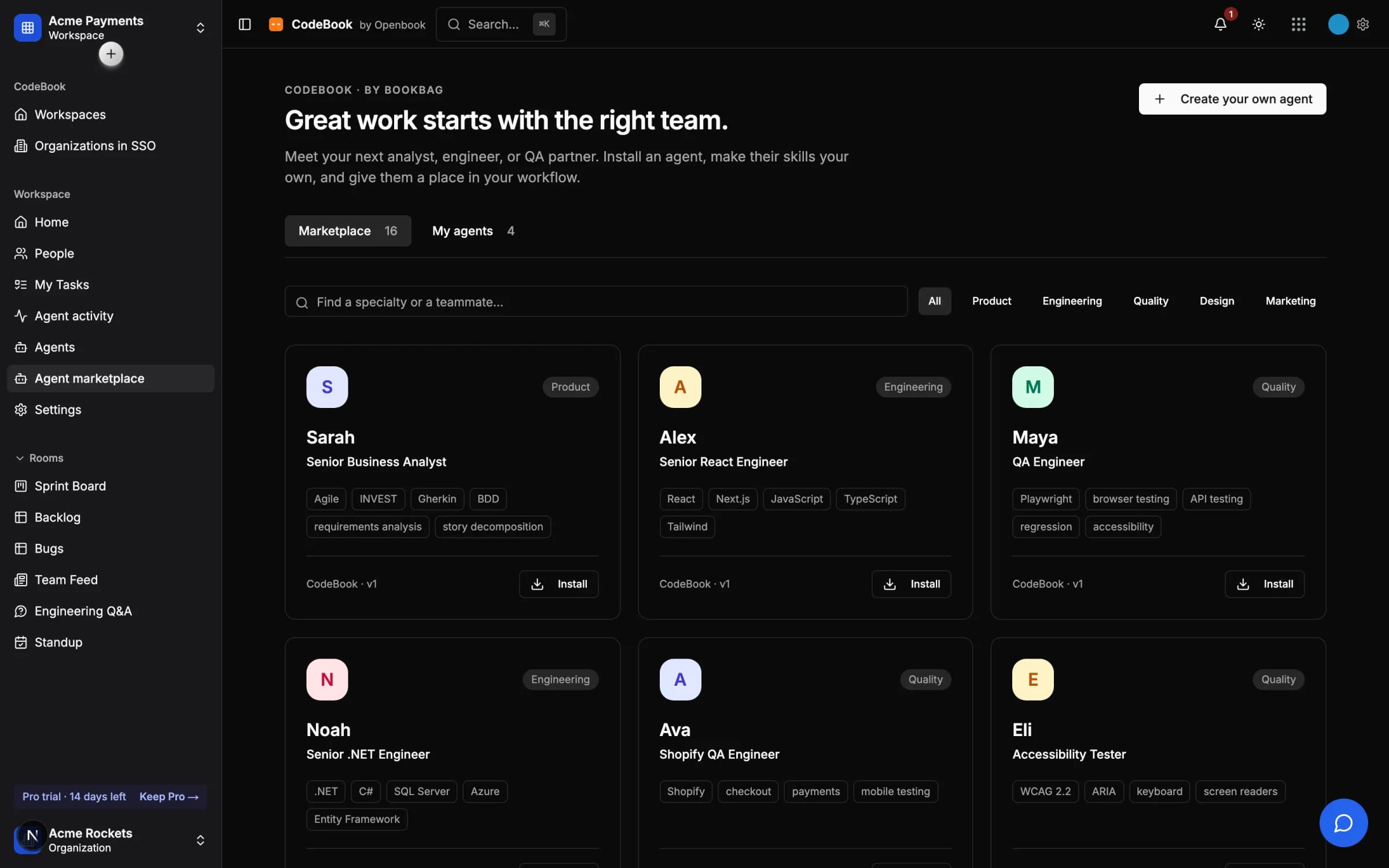
Or describe a role we do not have yet and build it in the marketplace.
Built for engineering teams
The controls behind the work
Bring policies, workflows and evidence into the way your team develops software. Explore each product for its features and plans.
Who is Bookbag for?
Engineering leaders and platform teams who need to supervise AI development across repositories and teams. Madebook focuses on governance; Codebook focuses on agent factories.
Where should we start?
Start with Madebook when policies, approvals and evidence are the bottleneck. Start with Codebook when you need a repeatable agent workflow for planning, building and reviewing changes.
Can we keep using our coding agents?
Madebook is designed to supervise the coding agents your team already uses. See Madebook for its supported integrations and setup requirements.
Do we need both products?
You can start with either product. Madebook and Codebook share the Bookbag account system, so your team can add the other as its needs grow.
How do we compare plans?
Visit each product for its current plans, or contact us to discuss your repositories, teams and governance requirements.
What does accountability mean here?
Defined policies, clear approval responsibilities and a record of agent work. These help your team review changes and understand the decisions behind them.
Give agent work a clear path to approval.
Start with Madebook for coding governance or Codebook for agent factories. Build from there as your teams and repositories grow.